Paul Michael Durivage · The catalog
Books & stories
Horror, speculative fiction, contemporary stories, and reflective nonfiction. Shop books and story collections on Amazon, or start with a free short-story PDF.
Choose your next book
Choose your format and confirm price and delivery on Amazon.
Supernatural horror
The Crossing
A possession at St. Jude’s draws a priest and a demonologist into a fight for survival.
Buy The Crossing on AmazonDark workplace satire
Is the Apocalypse a Valid Use of Sick Days?
The world is ending. Work still expects you to clock in. For readers who like their catastrophes with deadpan humor.
Buy Apocalypse on AmazonColoring & discovery
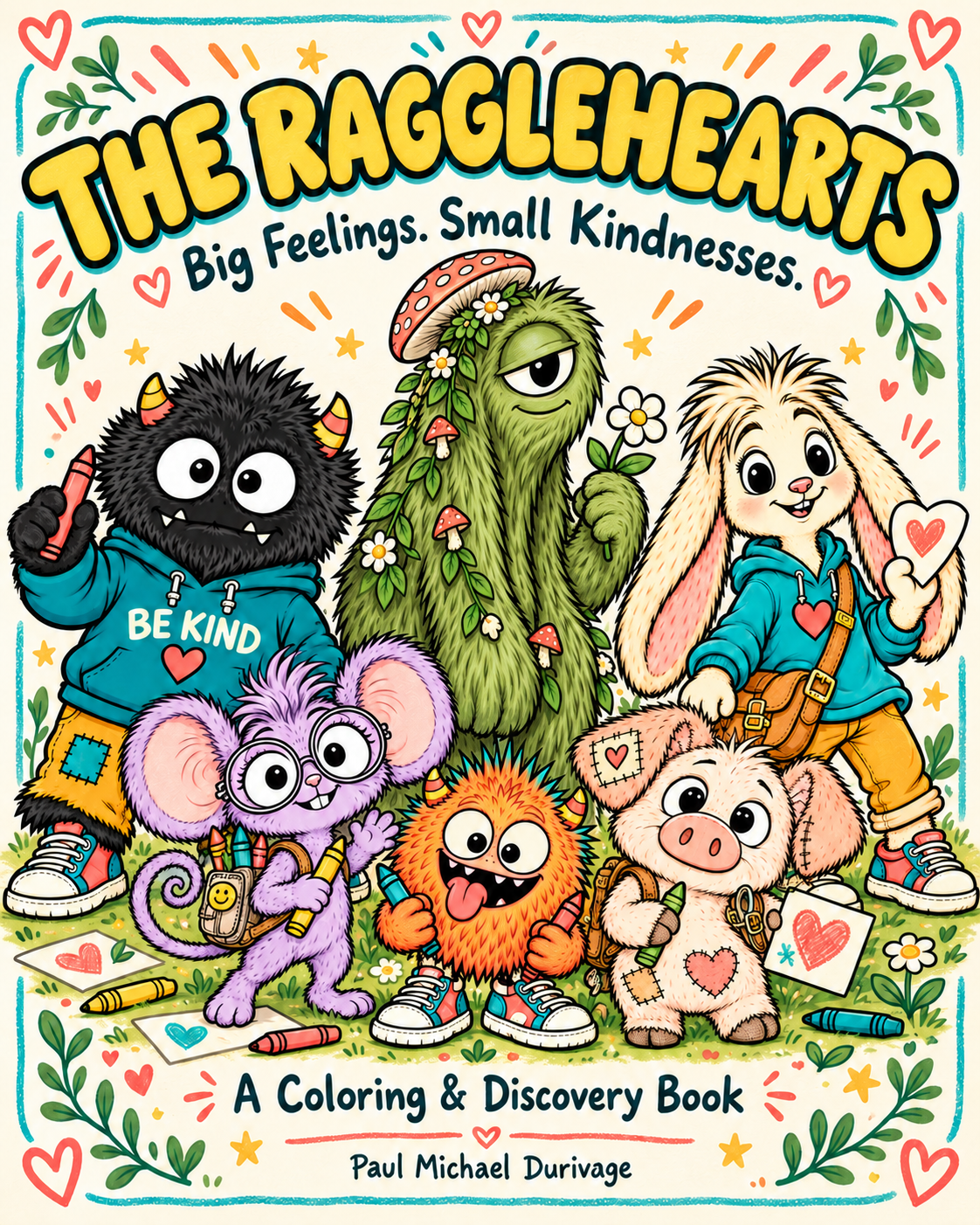
The Ragglehearts
A world of feelings, friendship, coloring, and small kindnesses with Bimble, Loppin, and their friends.
Buy The Ragglehearts on AmazonSupernatural horror · Now published
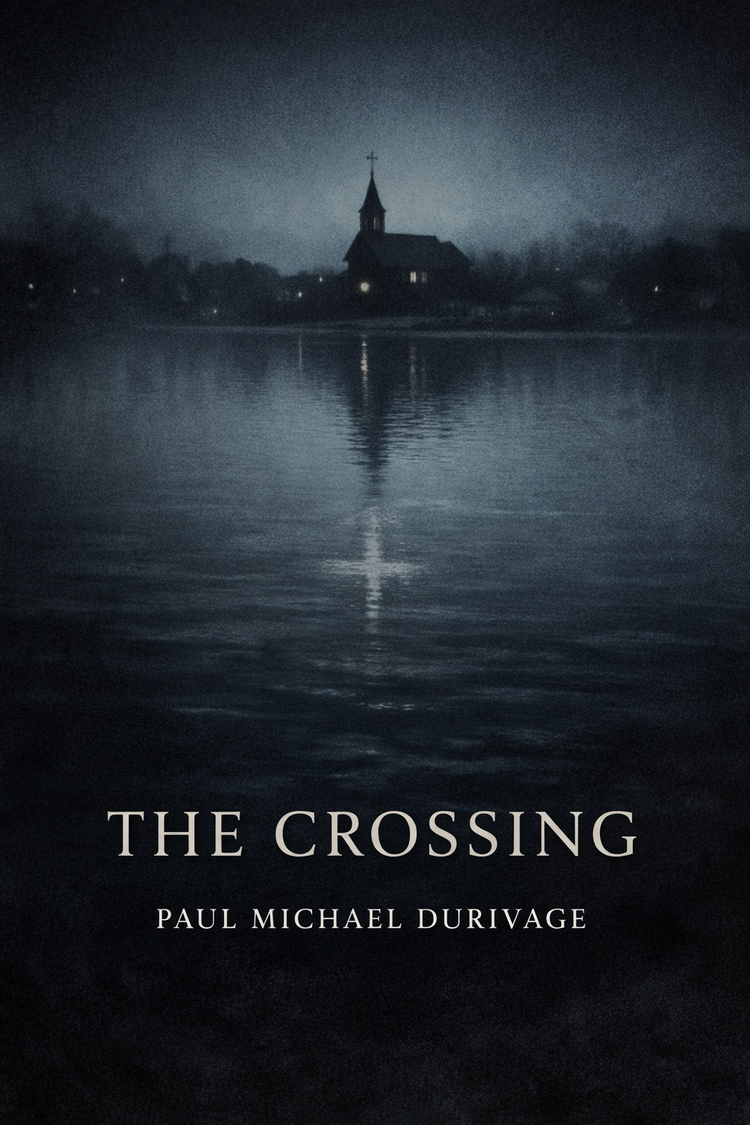
The Crossing
The church was supposed to be a refuge. The thing inside it knows your name.
At St. Jude’s parish in Ripley, Ohio, a young volunteer’s possession turns the sanctuary into a place of violence. Father Michael Donnelly hears his dead mother’s voice speaking through her—and realizes that whatever has entered his church knows exactly where to hurt him.
The call for help reaches Evan, a demonologist whose childhood in a Connecticut house taught him what can hide behind an ordinary door. The details coming out of Ohio are painfully familiar. He packs his tools and heads toward the kind of terror he has spent his adult life trying to keep outside.
The Crossing follows a priest and a survivor confronting an entity that uses memory, fear, and sacred spaces against them. Faith matters. So does finding a way to keep people alive.
The Quiet Return collections
Contemporary short fiction about ordinary lives. Two companion collections, each readable on its own.

Contemporary fiction · 29 short stories
The Quiet Return
Notes from Ordinary Hours
Coming back is one thing. Being counted on is another.
A father arrives sober and early to collect his daughter. A rental clerk discovers an unfair charge. A bakery worker weighs contact with the sister she blocked. Across twenty-nine contemporary short stories, Paul Michael Durivage follows imperfect people through family tensions, ordinary responsibilities, and the difficult work of following through, with dry humor and tenderness.
Contemporary fiction · 26 short stories
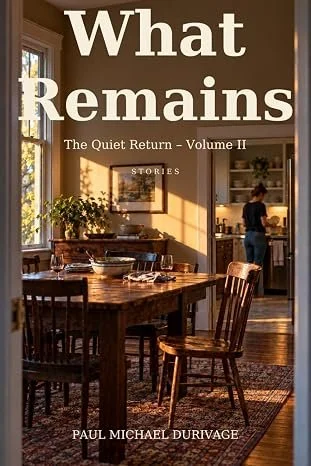
What Remains
The Quiet Return – Volume II
You can do the right thing and still have something to live with.
Mara fears losing her late father’s last message. A furniture maker faces a customer’s doubts. Gabe attends his daughter’s wedding sober, accepting the seat she chose. These twenty-six contemporary short stories explore grief, work, money, family obligations, and uncertain faith, allowing room for affection, irritation, and laughter. This companion collection stands on its own.
Fiction
Ordinary lives under extraordinary pressure.
Psychological thriller · Coming Soon
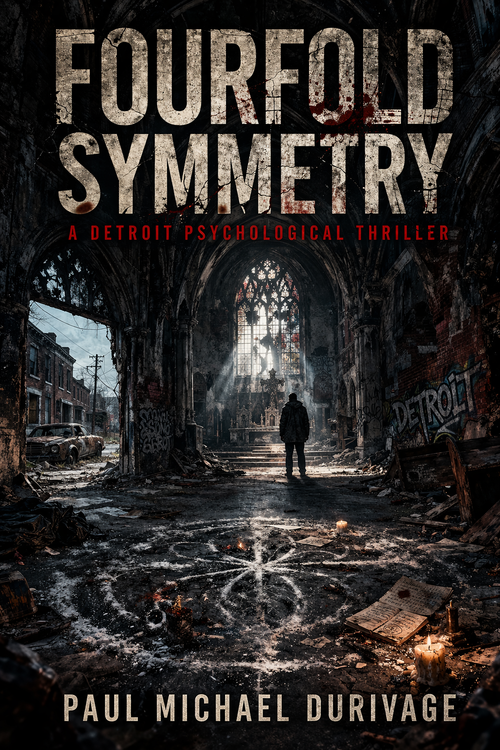
Fourfold Symmetry
The crime scene is too precise to be chaos.
In an abandoned Detroit cathedral, a body has been arranged with deliberate geometry. Detective Elias Thorne studies the room, the angles, and the care behind the display. Someone has planned more than a murder. Someone has planned how it will be seen.
As Thorne follows the pattern through the city, the violence begins to reveal a system built around control. Its logic reaches beyond one crime scene, turning people into components and suffering into procedure. Understanding it may be the only way to interrupt what comes next.
But Thorne’s own need for order makes that understanding dangerous. Fourfold Symmetry is a psychological thriller about obsession, organized cruelty, and the choices a detective makes when the method he is hunting starts to shape his own.
Supernatural horror · Novel
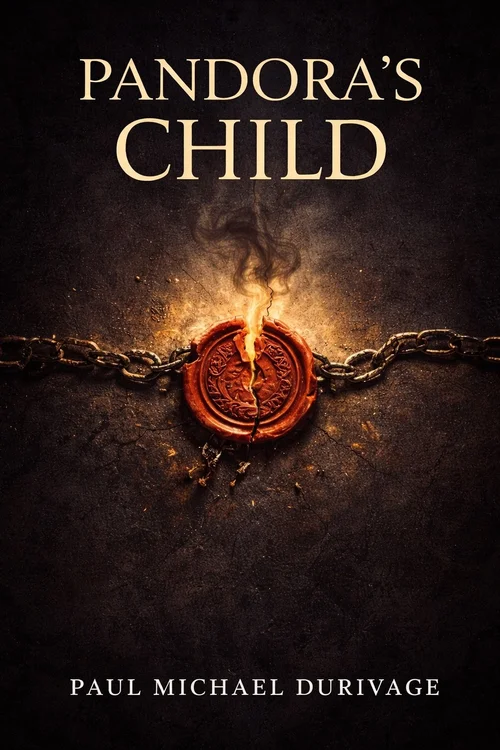
Pandora’s Child
What if Hell isn’t fire—but paperwork?
When sixteen-year-old Evan Stedman is shot and rushed into emergency surgery, his estranged father Benjamin stumbles into another world hidden beneath the hospital—a labyrinth of waiting rooms, intake windows, and immaculate departments where suffering is filed, renamed, and made official.
Down there, a bureaucratic Hell has claimed Evan by mistake. To bring him home, Benjamin must cross its impossible districts with the help of a nameless boy who seems to know more than he should. But every office wants something: a signature, a confession, a surrender. And the deeper Benjamin goes, the more the system reshapes hope into relief, silence into consent, and love into leverage.
As the machinery of the Underworld reaches back into the hospital above, Benjamin must choose whether saving his son means claiming him—or finally learning how to stay. Pandora’s Child is a dark contemporary fantasy about fatherhood, addiction, identity, and the cost of presence.
View on Amazon →The Ragglehearts storybooks
Four stories for ages 4–8. Big feelings, friendship, and small acts of kindness.
The Ragglehearts Kickstarter is live. Explore rewards covering six storybooks and a coloring and discovery book. Estimated reward delivery: February 2027.
Explore The Ragglehearts book fundraiser
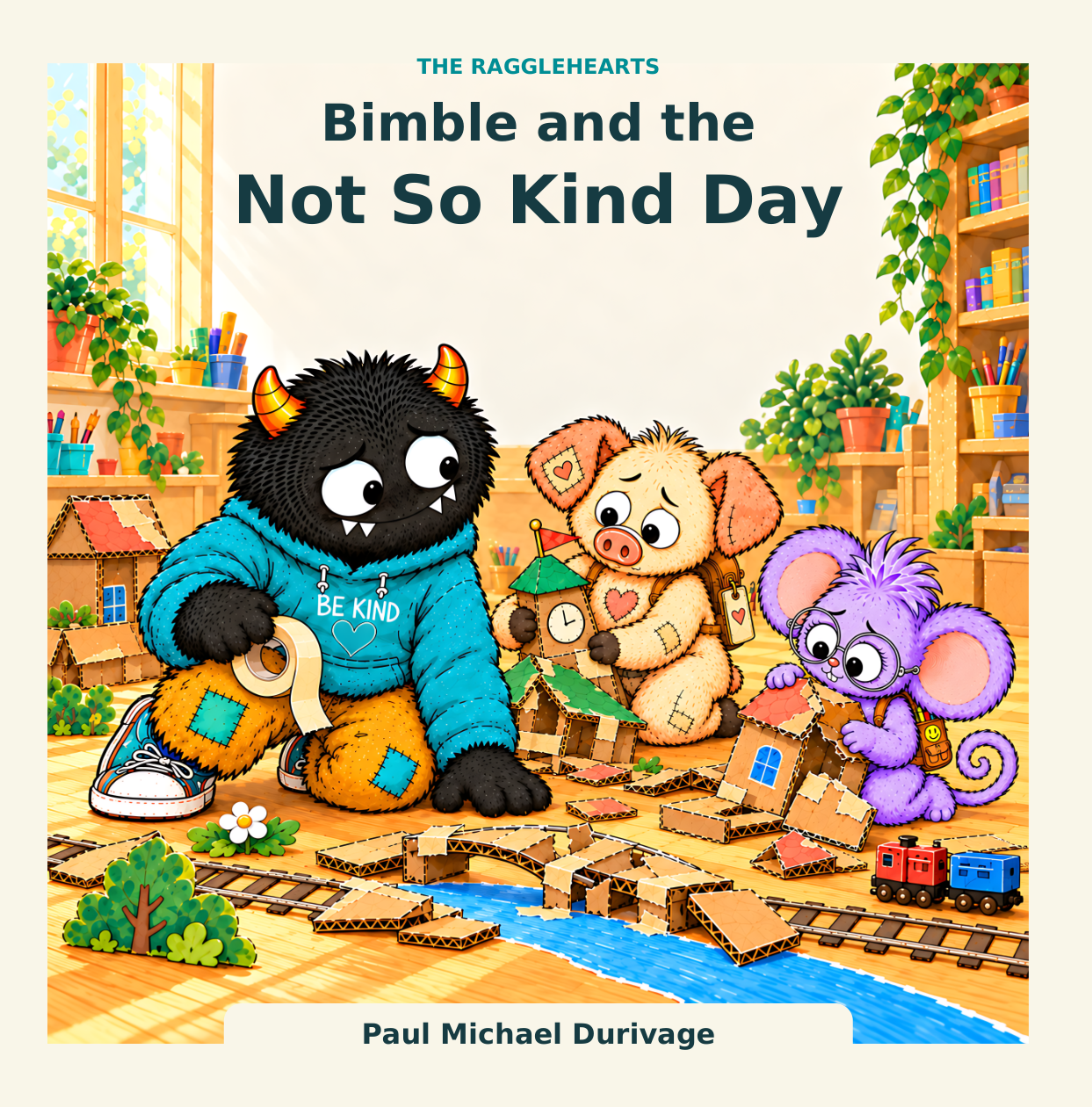
Book 1 · Now available · 32 pages
Bimble and the Not So Kind Day
One bad choice. A town in pieces. A chance to make it right.
Bimble’s bridge keeps falling down. When frustration takes over, his friends’ toy-train town comes tumbling down too. Now he has more to repair than cardboard. A story about belonging, responsibility, and the work that comes after sorry.
Buy Bimble on Amazon →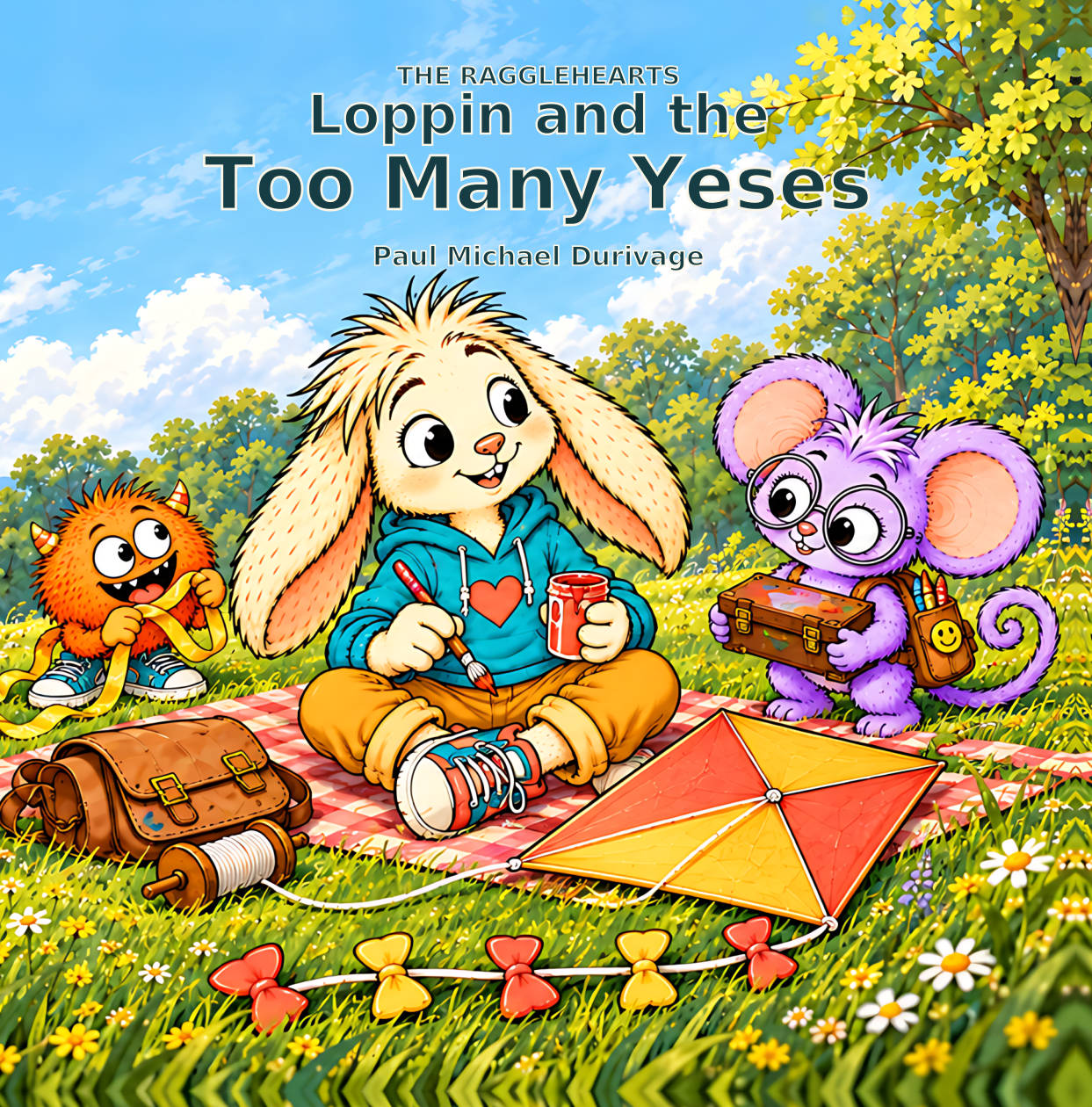
Book 2 · Now available · 32 pages
Loppin and the Too Many Yeses
He likes helping. He wants a turn, too.
The wind is perfect for flying a kite. But every time a friend asks for help, Loppin says yes—and his own kite keeps waiting. A story about friendship, kindness, and learning to say “not now.”
Buy Loppin on Amazon →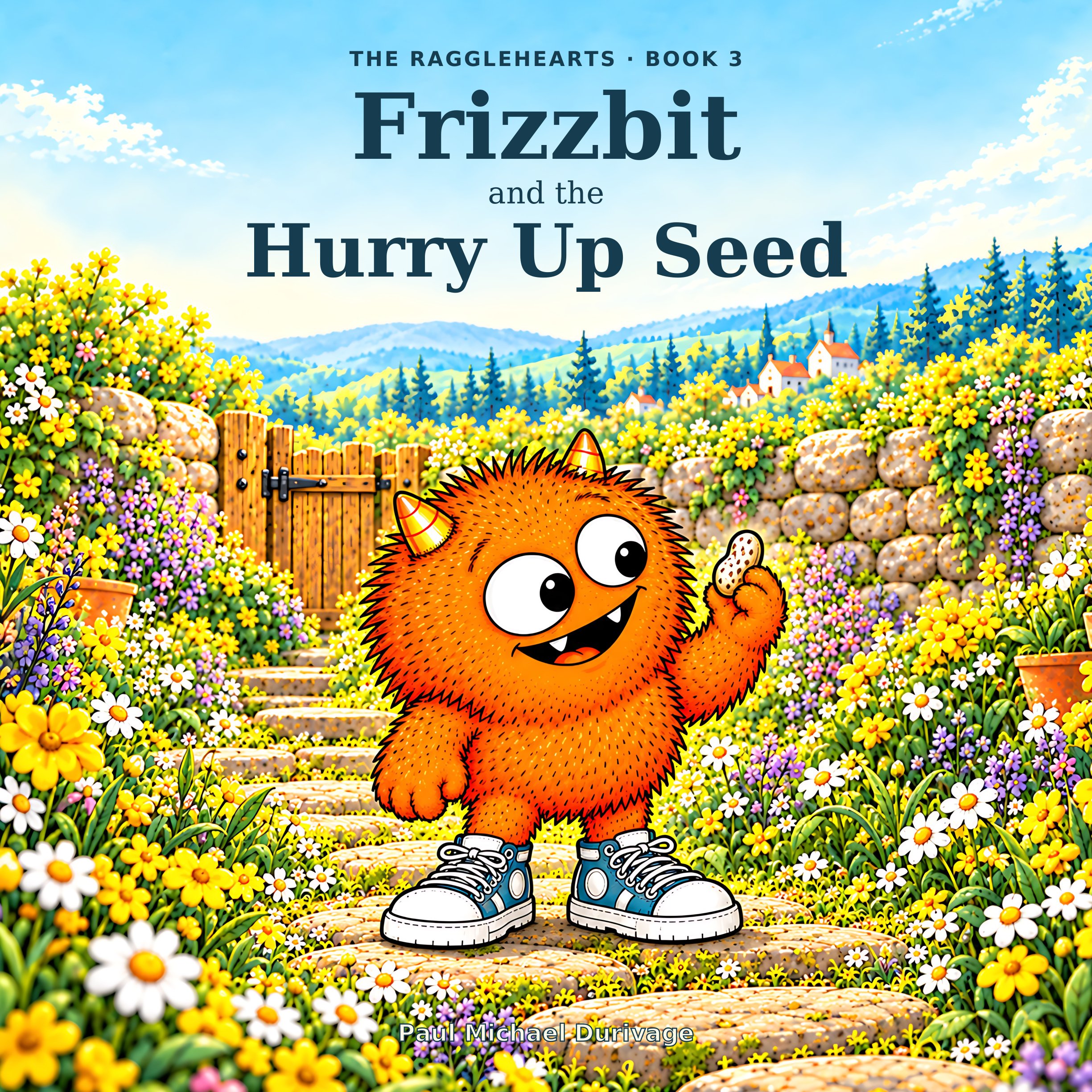
Book 3 · Now available · 32 pages
Frizzbit and the Hurry Up Seed
Frizzbit wants his plant to grow right now. With a little help from his friends, he discovers how to care for something small while giving it the time it needs. A colorful Ragglehearts story about patience and friendship.
Buy Frizzbit on Amazon →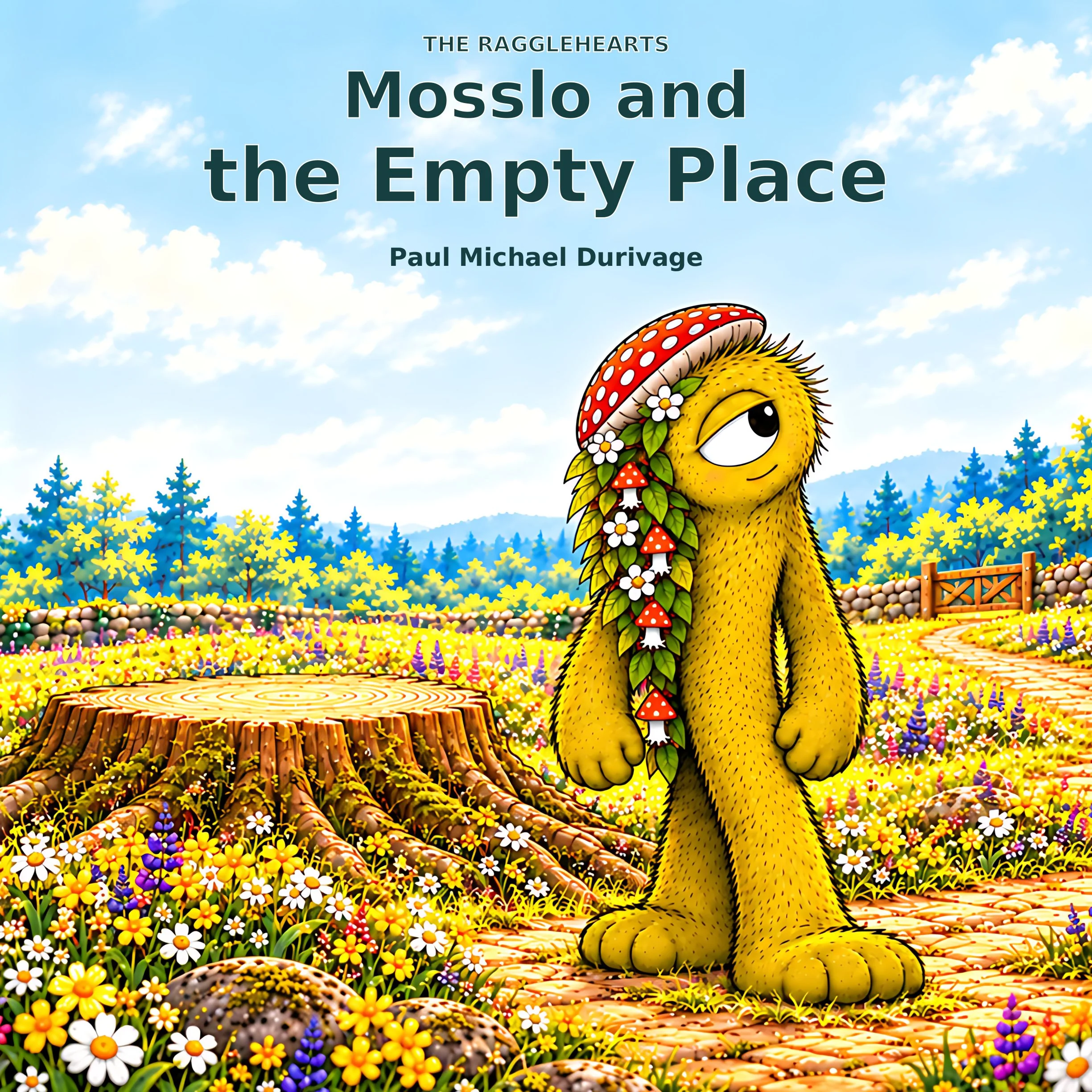
Book 4 · Now available · 32 pages
Mosslo and the Empty Place
When Mosslo loses his favorite willow, his friends cannot put it back. They can stay beside him. A gentle Ragglehearts story about missing something you love, sharing memories, and finding room for friendship.
Buy Mosslo on Amazon →Written by Paul Michael Durivage. Choose your copy and confirm the current price and delivery on Amazon.
Coloring & discovery
Big feelings. Small kindnesses.
A Coloring & Discovery Book
THE RAGGLEHEARTS
Big Feelings. Small Kindnesses.
By Paul Michael Durivage.
Bimble, Loppin, Frizzbit, Mosslo, Tuli, and Pogwick bring warmth and curiosity to a world of feelings, friendship, coloring, and discovery.
Free short stories
Two complete stories, ready to read as free PDF downloads.
Short story · Free PDF
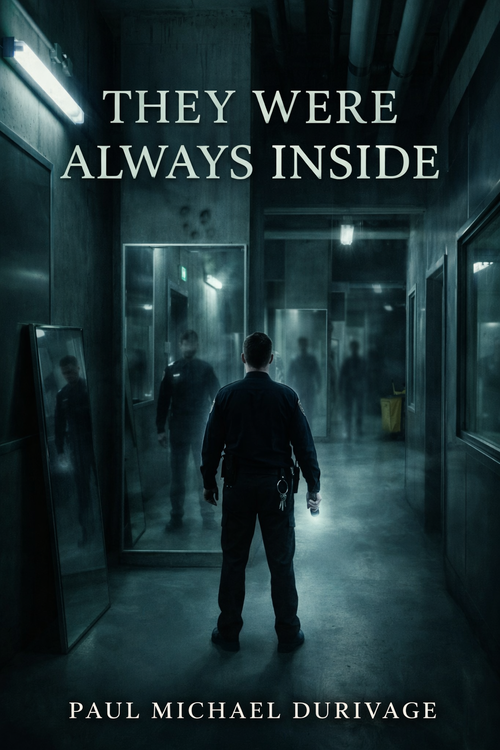
They Were Always Inside
Something in the reflections is watching. Learning. Getting closer every time it almost matches you.
Download free PDF →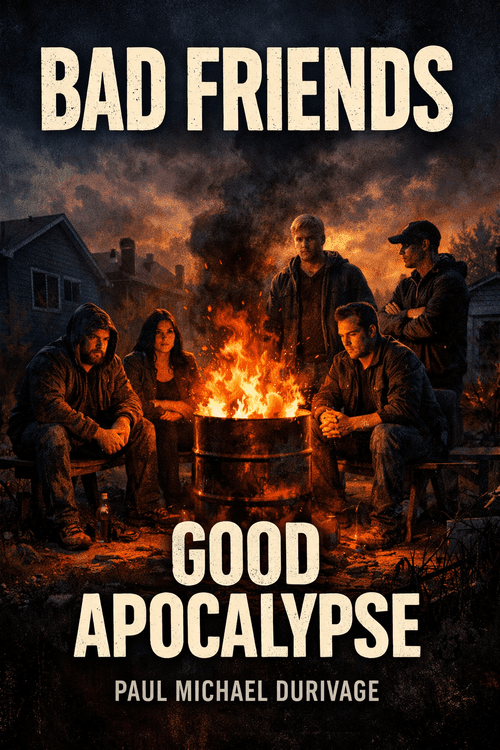
Short story · Free PDF
Bad Friends Good Apocalypse
The world ended. Six flawed people are trapped together—and the greatest threat may be inside the house.
Download free PDF →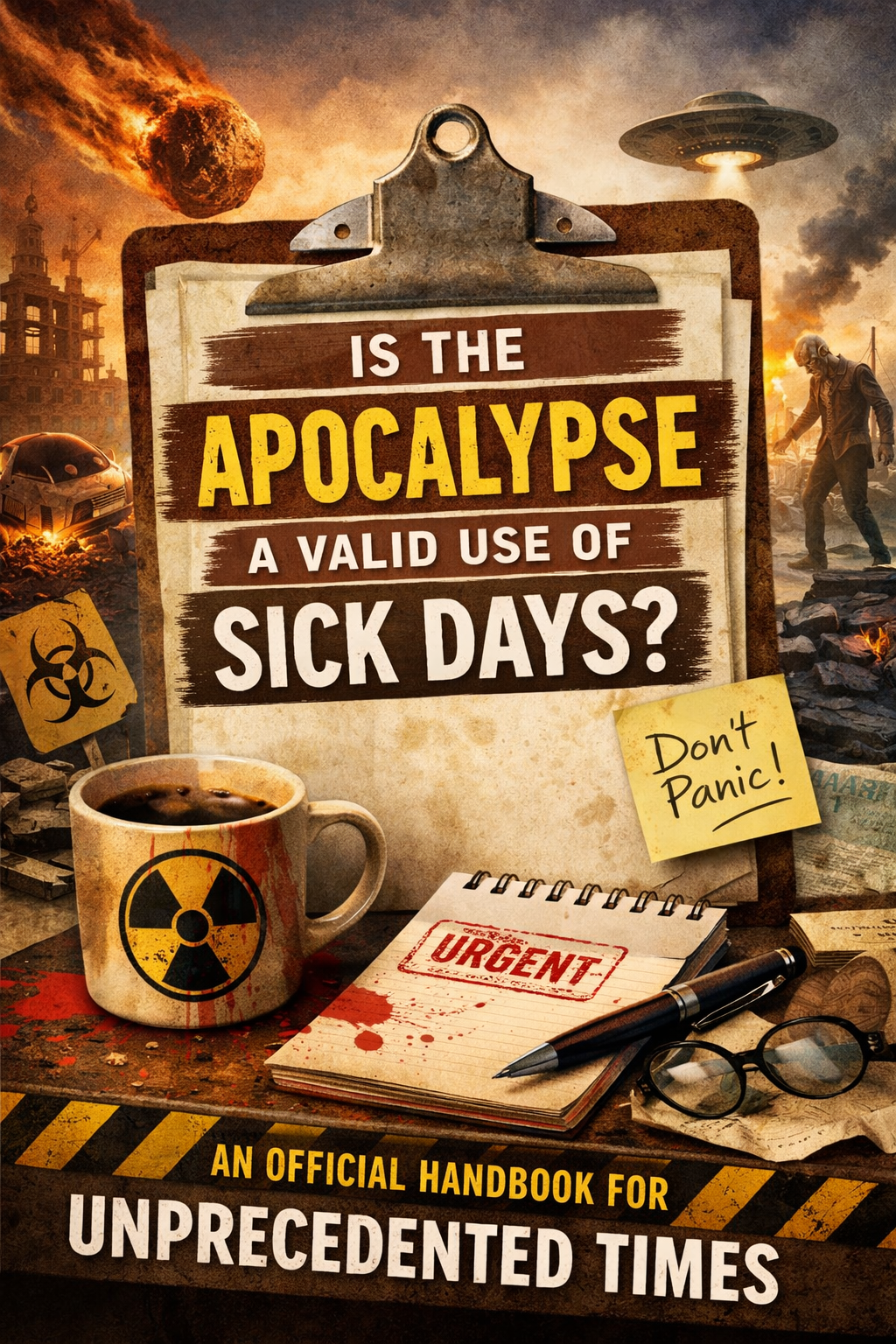
Is the Apocalypse a Valid Use of Sick Days?
The apocalypse is real. HR still needs the correct absence code.
At 7:58 on Tuesday morning, Paul M. tries to request a sick day. Unfortunately, “apocalypse” isn’t in the dropdown.
Outside his apartment, a chrome alien is skateboarding over a burning Honda Civic. The sky is coming apart. His company has one concern: employees are expected to badge in by 9:00.
What follows is a deadpan descent through mandatory meetings, attendance policies, survival subscriptions, vendor weather, performance improvement plans, and a workplace determined to preserve business as usual long after “usual” has ceased to exist.
Is the Apocalypse a Valid Use of Sick Days? is a dark workplace satire about bureaucracy, survival, and the systems that keep demanding compliance even when reality itself has stopped cooperating.
Reflective nonfiction
Awareness, reaction, and the work of living more deliberately.
Reflective nonfiction
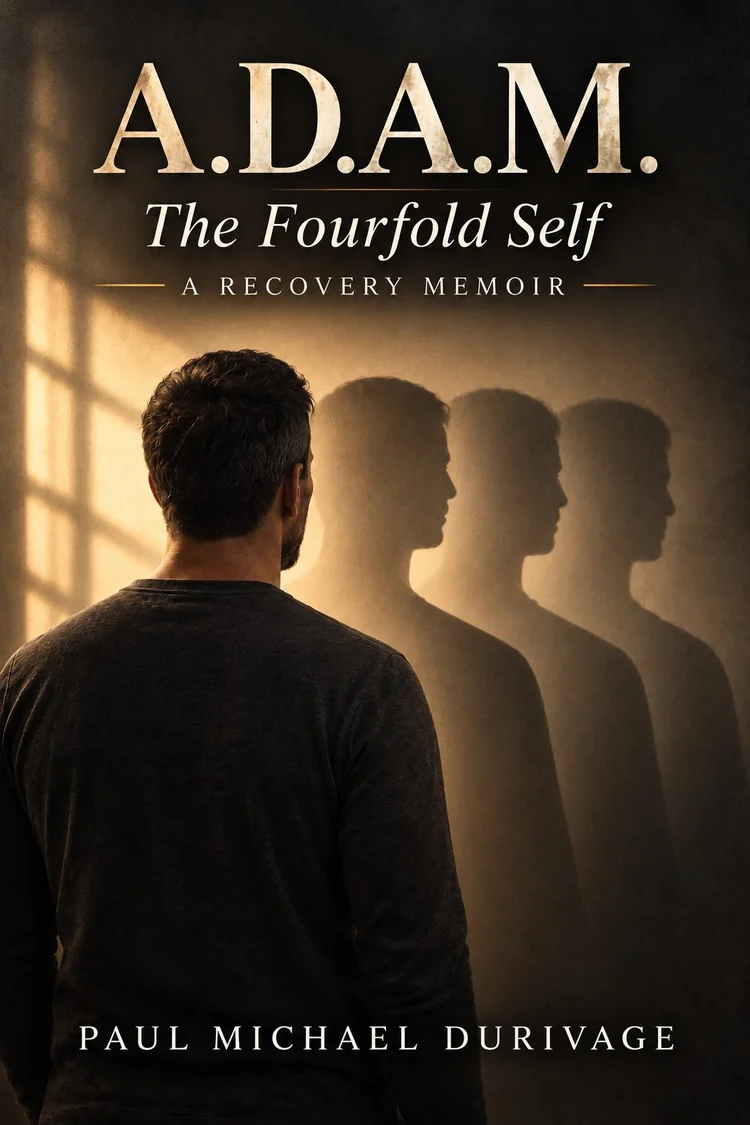
A.D.A.M.
Stopping the substance didn’t stop the patterns.
A.D.A.M.: The Fourfold Self is a recovery memoir about addiction, relapse, responsibility, and the work that remains after getting sober. Paul Michael Durivage traces the distance between wanting to change and learning to show up reliably—for work, for family, and for the life in front of him.
Along the way, he develops a personal framework: Animal, Demon, Angel, Man. These are metaphors for bodily needs, protective thinking, the pull toward integrity, and the capacity to notice and choose. The letters also name a practice: Awareness, Discipline, Alignment, Meaning.
The framework gives language to conflicting impulses without turning them into diagnoses. For readers navigating recovery or recognizing their own reactive habits, the memoir offers an honest account of learning to pause, ask for help, repair harm, and keep taking responsibility when insight alone is not enough.
View on Amazon →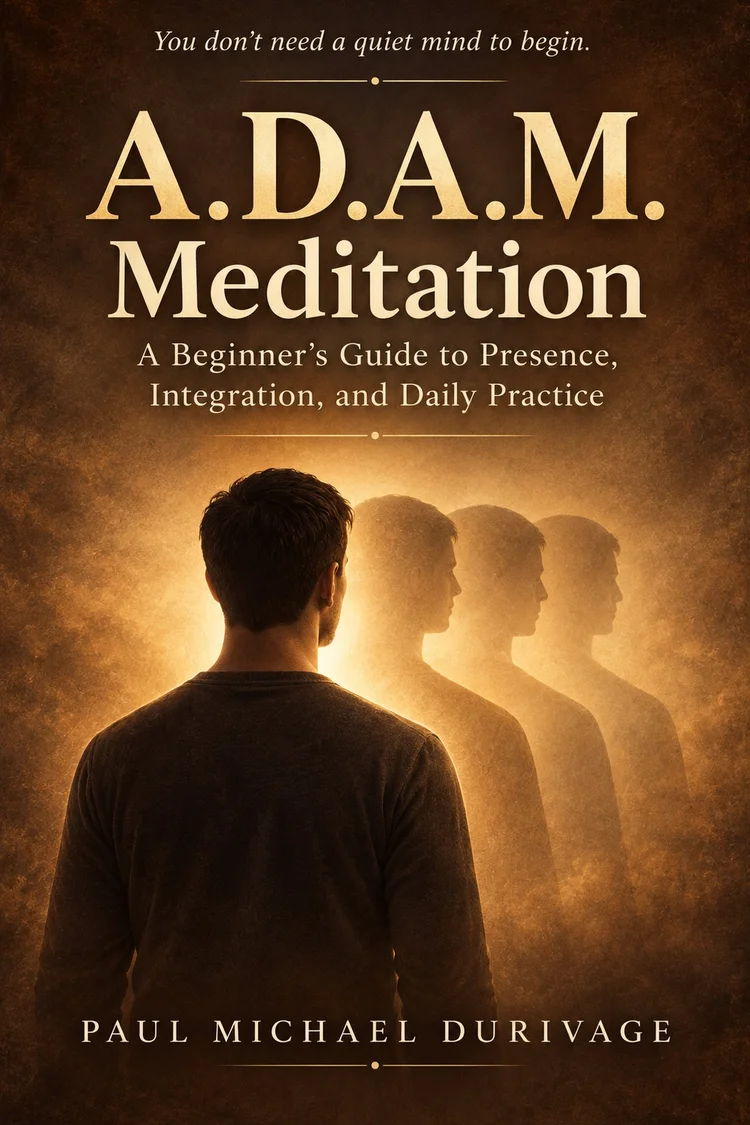
Reflective nonfiction
The Adam Meditation Guide
You do not need a quiet mind before you begin.
The Adam Meditation Guide brings the A.D.A.M. framework into daily practice. Animal, Demon, Angel, Man become a way to notice bodily signals, recognize protective stories, listen for what matters, and choose a next action. The terms are personal metaphors, with room for the ordinary mess of being human.
The guide includes 24 guided practices, from a one-minute return and an eyes-open exercise to preparing for a difficult conversation, recovering after conflict, and moving from work into home life. A situation index, writing pages, and an optional 90-day practice route help readers find a useful place to start.
Written for beginners, it can stand alone or accompany the A.D.A.M. memoir. Short sessions, flexible anchors, and practical reflection make the work approachable. The aim is to return to attention, honesty, and a choice you can follow through on.
View on Amazon →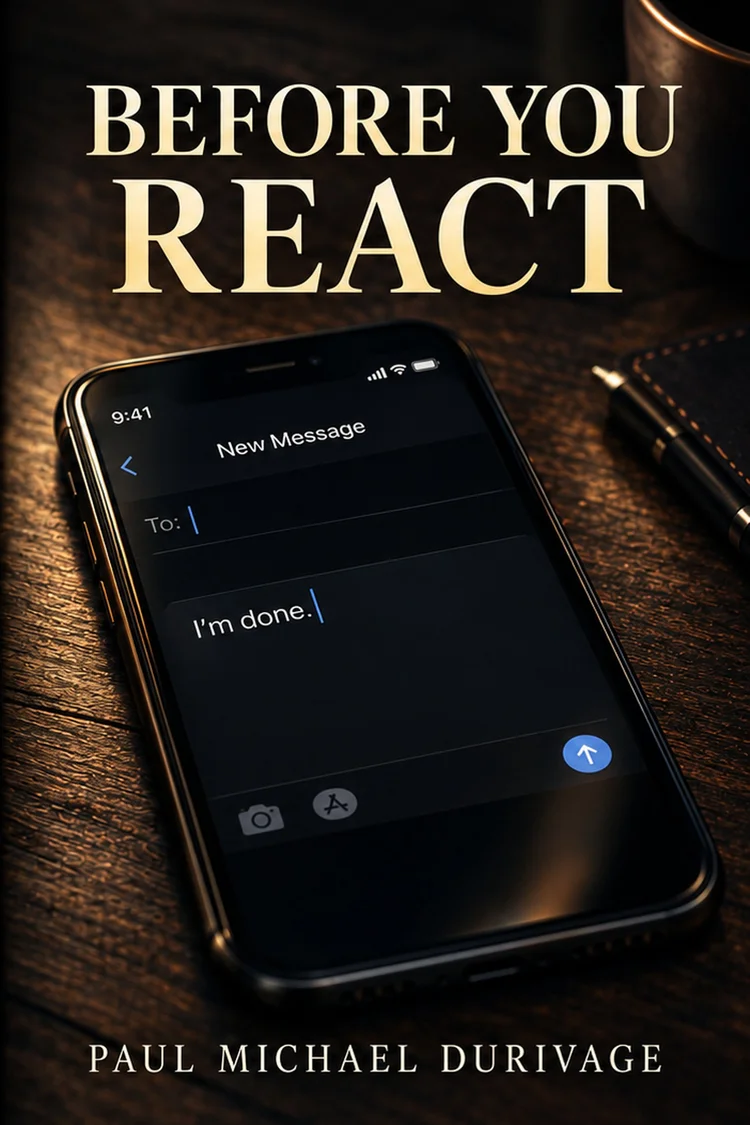
Reflective nonfiction
Before You React
You know what you should have said. Usually about ten minutes after you said something else.
The text went out. The joke landed badly. A simple question at dinner became a speech. Before You React looks at the moment before a reaction—and what you can do when you have already missed it.
Across 49 short chapters, Paul Michael Durivage uses personal experience, plain talk, and humor to explore a simple practice: Stop. Breathe. Choose. Everyday situations include work stress, criticism, parenting, difficult messages, boundaries, and apologies. Examples of what to say, small exercises, and three reflection questions per chapter turn recognition into something readers can practice.
A pause can lead to a firm no, an honest correction, a request for help, or an apology that does not ask someone else to make you feel better. The book is for people who want to handle ordinary pressure more deliberately, including the repair that comes after a mistake. Start with the next sentence.
View on Amazon →